

How much do you Really Do you know magnesium? You may be familiar with the most commonly talked about characteristics of magnesium: it’s an essential mineral for sleep and it’s involved in hundreds of bodily processes.
But what else is there to know about magnesium?
Well, there is more magnesium than you might think! It’s not just something your cells depend on, but a material used for many things. Want to know what we mean? Keep reading! We’re going to cover 8 fun facts about magnesium.
1. Magnesium has a history of healing
The name “magnesium” comes from Magnetes – an ancient Greek tribe that inhabited the land where magnesium carbonate was first found. Back then it was used as a laxative to help treat a range of ailments.
Then, in the 1600s, in an English town called Epsom, magnesium-rich water was discovered in the Epsom spring. This led to the city becoming a popular health and spa spot, with people drinking the water to “purify the blood”.
Wondering if this has anything to do with “Epsom salts”? Well, it is! Not only are Epsom salts magnesium sulfate, they take their name from this very city in England.
2. Magnesium is the 8th most abundant element in the universe
Magnesium is abundant throughout the universe. But luckily, we don’t have to look too far to find it. The element is also found in land and sea, as well as in plants, animals, and humans.
In fact, magnesium makes up about 2% of the earth’s crust, and even more is found in the deeper layers of our planet. 13% of the total mass of the Earth is made up of magnesium!
Magnesium is also the third most abundant mineral dissolved in seawater. There is one magnesium ion in every molecule of chlorophyll in every green plant. And your body also contains about 4 to 6 teaspoons of magnesium.
That’s a lot of magnesium lying around!
3. Magnesium does not exist naturally on its own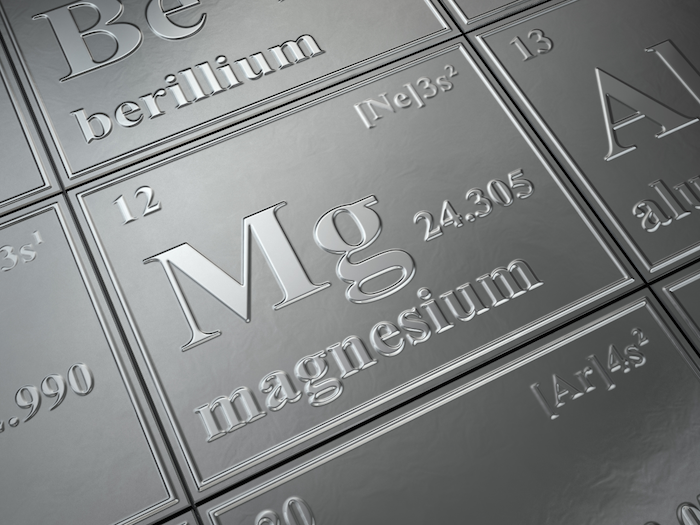
Although abundant, magnesium is different from other natural elements in that it cannot be found in nature independently of other elements such as carbon, calcium or oxygen.
For example, magnesium in the ocean is magnesium chloride. In the earth you can find magnesium carbonate, and in places like Epsom you will find magnesium sulphate.
Purality Health uses magnesium bisglycinate because not only is it the closest to the type of magnesium you’ll find in food, but it’s also been found to be the most bioavailable magnesium. Magnesium bisglycinate is simply magnesium combined with two molecules of glycine.
Glycine is an amino acid with many impressive health benefits. Your body needs glycine to make important compounds, such as glutathione, creatine, and collagen. This amino acid may also protect your liver from alcohol damage and improve sleep quality and heart health.
4. Magnesium is important for aviation and even space travel
Wait, taking magnesium will help you get into space? Well, not quite. But a little !
You see, just because magnesium doesn’t come naturally doesn’t mean we can’t isolate it. In 1808, Sir Humphry Davy passed an electric current through magnesium oxide to produce pure magnesium. However, he was only able to isolate magnesium in small amounts.
It was not until 1831 that researchers discovered how to isolate magnesium in larger quantities, although it took until 1909 to produce pure magnesium on an industrial level.
At one-third the density of aluminum, magnesium is the lightest structural metal on the planet. For this reason, it has played a key role in the aircraft and aerospace industries where it is used as an alloy for optimum strength and lightness.
So while taking your magnesium won’t help you get into space, isolating that magnesium and building a spaceship with it will!
5. Magnesium ions are found in every cell of the body
In the human body, magnesium is responsible for activating hundreds of biochemical reactions carried out by enzymes. As such, magnesium ions are found in every cell of your body.
About 60% of your body’s magnesium is found in your bones, while your muscles contain 39%, and the remaining 1% exists in your soft tissues, blood, and other fluids.
6. Magnesium is vital for all body systems
Throughout the body, magnesium has several important functions.
Some of them include:
- – Support the immune system
- – Regulation of blood pressure
- – Modulation of muscle movement
- – Binding to calming receptors to calm the body
- – Build new proteins
- – Creation and repair of DNA and RNA
- – Transform food into energy
- – Regulate calcium and vitamin D levels
And again, these are just a few of the most important ways magnesium supports your health.
Low levels of the mineral have been linked to an increased risk of anxiety and depression, as magnesium is also essential for the production of serotonin and plays an essential role in mood, brain function, memory and learning .
7. Plants also need magnesium
Highly present in every green plant, magnesium is crucial for photosynthesis – the process of extracting energy from sunlight.
In 1915, Richard Willstatter won the Nobel Prize for describing the structure of this green plant pigment and identifying magnesium as the central element.
 8. Magnesium deficiency is all too common
While magnesium is available in fruits, vegetables, nuts, legumes, and whole grains, unfortunately, the standard American diet only provides about 50% of the recommended daily allowance for this important nutrient.
That’s why too many people can experience muscle cramps, headaches, chronic pain, and sleep problems.
If you’re worried about your levels – whether it’s for muscle health, to help you sleep better, or just to make sure the hundreds of processes throughout your body that need magnesium can do their job well – we you covered.
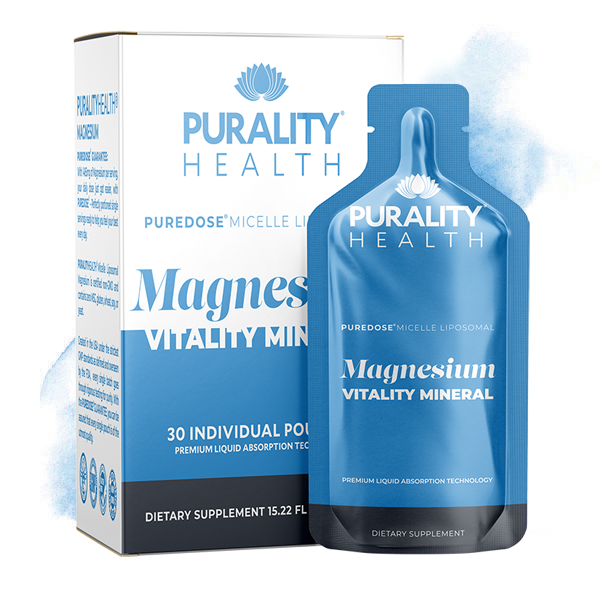
Micellar Liposomal Magnesium from Purality Health ensures that the mineral can be delivered safely INTO your bloodstream so that it can be put to good use.
So stop taking magnesium supplements that pass through you without any health benefits.
>>> Click here to learn more about the most absorbable form of magnesium on the market

8 comments
Can you be more specific about the content of your article? After reading it, I still have some doubts. Hope you can help me.
Can you be more specific about the content of your article? After reading it, I still have some doubts. Hope you can help me.
Can you be more specific about the content of your article? After reading it, I still have some doubts. Hope you can help me.
Thank you for your sharing. I am worried that I lack creative ideas. It is your article that makes me full of hope. Thank you. But, I have a question, can you help me?
Your point of view caught my eye and was very interesting. Thanks. I have a question for you.
Your article helped me a lot, is there any more related content? Thanks!
I don’t think the title of your article matches the content lol. Just kidding, mainly because I had some doubts after reading the article.
Can you be more specific about the content of your article? After reading it, I still have some doubts. Hope you can help me.